Roger Milla: The Man Who Made Africa Believe
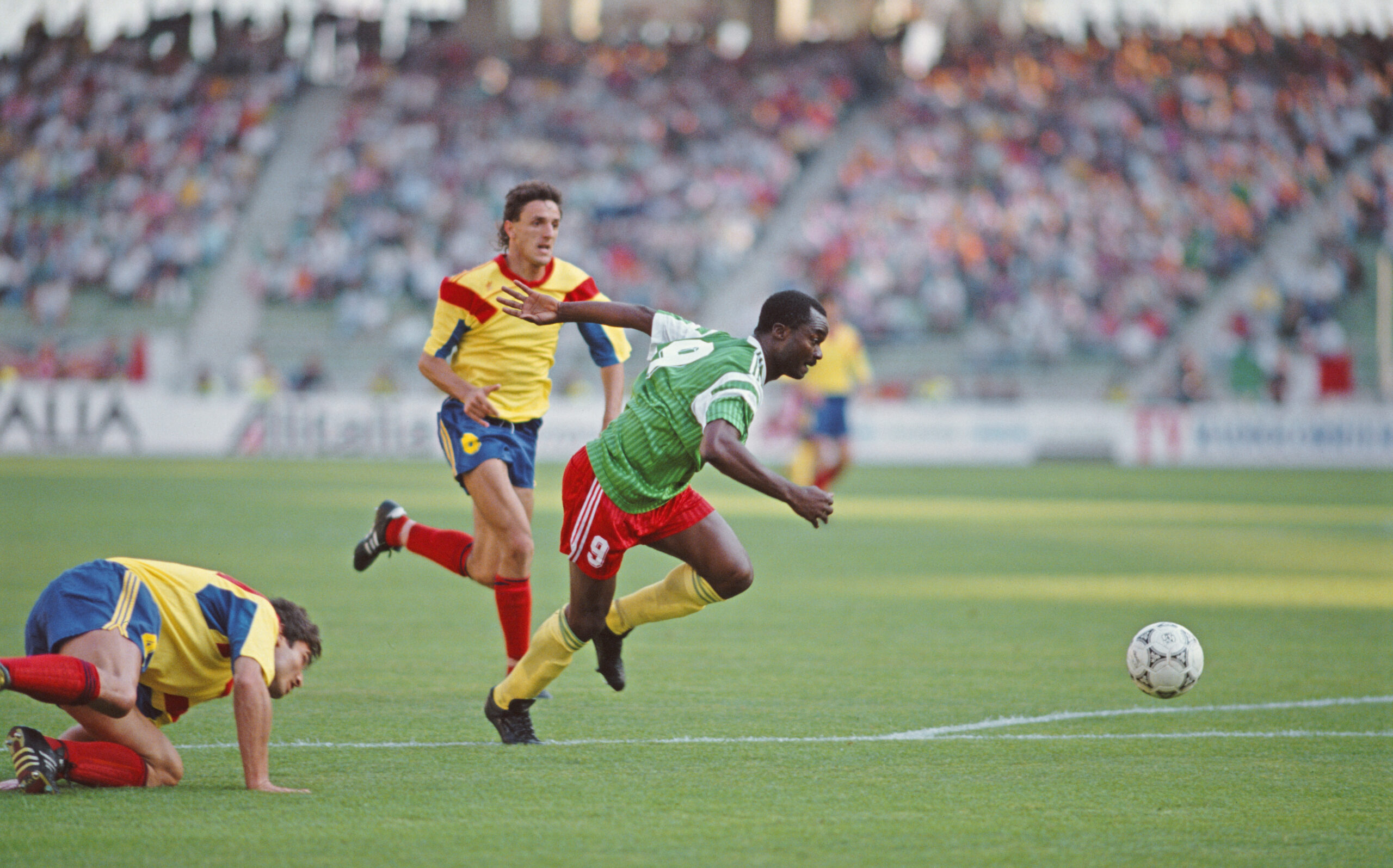
The Dancer at the Corner Flag
There are moments in football that transcend the sport itself — moments that become cultural touchstones, symbols of something far greater than a goal or a tournament. Roger Milla's corner flag dance at Italia 90 was one of those moments.
Albert Roger Milla Miller was born on May 20, 1952, in Yaoundé, Cameroon. By the time he arrived at his first World Cup in 1982, he was already a decorated club player — a two-time African Footballer of the Year — but the world had not yet truly seen him. That would change eight years later in Italy.
Italia 90: An Aging Lion Roars
The 1990 World Cup is where Roger Milla wrote his name into the permanent record of the sport. At 38 years old — an age when most players have long since retired — Milla was coaxed out of semi-retirement in Réunion by Cameroonian president Paul Biya himself. It was an extraordinary act of political football, and it produced extraordinary results.
Cameroon opened the tournament by stunning Argentina, the reigning world champions, 1–0. They were chaotic, passionate, occasionally reckless — and entirely magnetic. When Milla came off the bench, he brought with him a joy that was almost anarchic. He scored twice against Romania, twice against Colombia, and each time he wheeled away to the corner flag and danced — a shimmy that felt like a celebration not just for Cameroon, but for all of Africa.
What Those Goals Meant
Cameroon reached the quarter-finals, becoming the first African team to do so. They lost narrowly to England, 3–2 after extra time, in a match that could easily have gone the other way. But the damage — in the best sense — had already been done. African football would never be seen the same way again.
Milla returned in 1994, aged 42, becoming the oldest goalscorer in World Cup history when he netted against Russia. The record still stands. It is one of those facts that seems too poetic to be true.
A Legacy Beyond Statistics
Roger Milla's importance cannot be measured in goals alone. He gave African players a belief that the World Cup stage was not too big for them. He showed that African football had personality, flair, and theatre. Entire generations of players — Drogba, Eto'o, Yaya Touré — grew up watching that corner flag dance and understanding that they, too, could command the world's attention.
In 2021, he was named in the FIFA list of greatest players. But in Africa, no list is needed. Everyone already knows.